Source Stackable Eco Friendly Colander and Mixing Bowl Set for Home, Hotel, Restaurant
Explore 30 listings for the stackable eco friendly colander and mixing bowl set designed for home kitchens, hotels, and restaurants. Buyers can compare stainless steel options with customized logos and varying sizes to find the best fit for their sourcing needs.
Key considerations
Products List


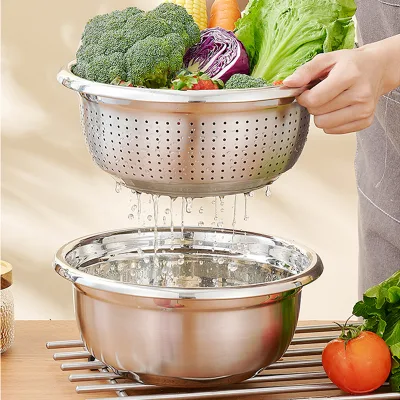


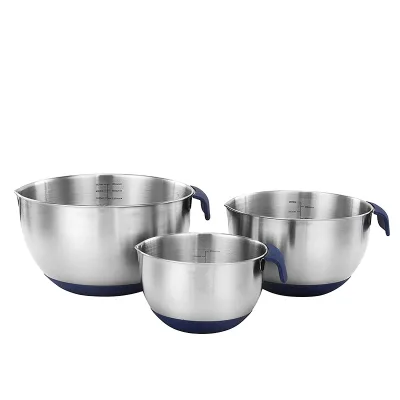
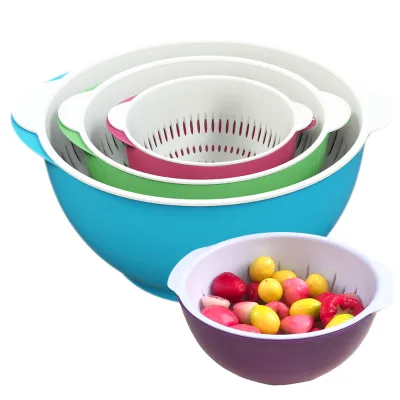

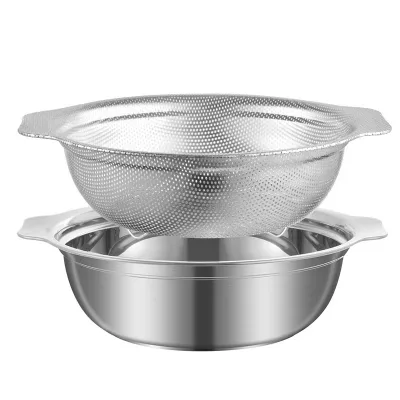



Comprehensive Sourcing Guide
Strategic Sourcing Guide for Stackable Eco-Friendly Colander and Mixing Bowl Sets
Understanding Product Definitions and Core Attributes
The market for stackable eco-friendly colander and mixing bowl sets is defined by a convergence of functional utility and material sustainability. In B2B procurement, understanding the precise definition of these items is critical for aligning supplier capabilities with buyer requirements. The core product category encompasses kitchen salad bowls sets that function as both strainers and mixing vessels. These items are frequently categorized under "Hot-Selling" types due to their high turnover in retail and hospitality sectors. A defining characteristic of this specific product line is the "stackable" design, which optimizes storage space and reduces shipping volume, a factor directly influencing logistics costs.
When evaluating product listings, buyers must distinguish between the functional description and the material composition. While the functional intent is a "colander bowl" or "salad bowl set," the material can vary significantly. Observed data indicates a strong presence of 201 Stainless Steel products, often described with a polished technique and a silver or stainless steel finish. However, the "Eco-Friendly" attribute often implies the use of recycled materials or sustainable manufacturing processes. In some contexts, this may involve RPET (Recycled Polyethylene Terephthalate) or other polymer-based dinnerware intended for meal use. The presence of "Multicolor" options alongside "Green" and "Silver" finishes suggests that buyers can source sets with varied aesthetic profiles to match specific brand identities or target demographics.
The "Country" style and "Round" shape are common design elements found in this category, often paired with specific dimensions such as 24, 26, and 28 cm diameters. These size variations are crucial for determining the capacity of the set and its suitability for different household or commercial needs. The "Single package size" of approximately 32x32x20 cm provides a baseline for calculating container utilization during international shipping. Buyers should note that while some listings specify "Non-Disposable" usage, the "Eco-Friendly" claim requires verification of the actual material lifecycle and recyclability, as this term is not legally defined in all jurisdictions without specific backing.
Technical Specifications and Material Verification
Technical due diligence is the cornerstone of sourcing high-quality colander and mixing bowl sets. The material composition is the primary determinant of durability, safety, and environmental impact. The supplied data highlights "201 Stainless Steel" as a prevalent material type. This alloy is known for its cost-effectiveness and adequate corrosion resistance for general kitchen use, though it differs from the more premium 304 grade. Procurement teams must verify the specific grade of stainless steel through mill test reports or third-party laboratory analysis, as the distinction between 201 and 304 significantly affects the product's longevity and resistance to rust, particularly in wet environments.
For products claiming to be "Eco-Friendly" through the use of RPET or similar polymers, the verification process shifts to checking the percentage of recycled content and the food-grade safety of the plastic. The "Dinnerware Type" classification as "Meal Use" implies that the product must meet specific migration limits for heavy metals and other chemicals. The "Polished" technique mentioned in the specifications suggests a surface finish that is easy to clean and resistant to staining, but it also requires inspection for burrs or sharp edges that could pose safety risks.
Size specifications are another critical technical parameter. The observed range of 24-26 cm for colander bowls in a set, alongside larger options up to 28 cm, dictates the functional utility of the product. Buyers should confirm whether the "Large" size designation corresponds to the maximum diameter or a specific model number like JS-1255 or FH-401. The "Lid Type" is consistently noted as "Without Lid," which simplifies the manufacturing process but may limit the product's versatility for storage compared to lidded alternatives. The "Single gross weight" of 8.000 kg for a set indicates a substantial mass, which is a key factor in freight calculations and handling requirements.
| Specification Category | Observed Data Points | Verification Requirement |
|---|---|---|
| Material Type | 201 Stainless Steel, RPET | Mill test reports, Food-grade certification |
| Dimensions | 24/26/28 cm, 32x32x20 cm | Physical measurement of samples |
| Weight | 8.000 kg (Single gross weight) | Weighing of packaged units |
| Finish | Polished, Silver, Green, Multicolor | Visual inspection for defects |
| Shape | Round | Dimensional accuracy check |
| Lid | Without Lid | Confirmation of accessory inclusion |
Compliance, Certification, and Safety Standards
Navigating the regulatory landscape for kitchenware is essential to ensure market access and consumer safety. The supplied facts explicitly mention "FDA" and "LFGB" as certifications associated with these products. FDA (Food and Drug Administration) compliance is mandatory for products entering the United States market, ensuring that materials do not leach harmful substances into food. LFGB (Lebensmittel- und Futtermittelgesetzbuch) is the German Food and Feed Code, a rigorous standard often required for European markets. The presence of these certifications in product descriptions is a strong indicator of compliance, but buyers must request valid, up-to-date test reports from independent laboratories to verify their authenticity.
The "Eco-Friendly" attribute, while marketing-driven, often correlates with specific environmental standards. Buyers should investigate whether the supplier adheres to recognized recycling standards for RPET materials or if the stainless steel production follows sustainable manufacturing protocols. The "Standard" field in the product data notes "See below list," which implies that specific technical standards exist but are not explicitly detailed in the summary. Procurement teams must request the full list of applicable standards, which may include ISO 9001 for quality management or specific food contact material standards like GB 4806 in China or EN 13432 for biodegradability if applicable.
Certification verification should extend beyond the product itself to the manufacturing facility. While the "Place of Origin" is listed as Guangdong, China, and the "Port of Dispatch" as Shantou or Shenzhen, the factory's own certifications (e.g., ISO, BSCI) are equally important for assessing the risk of non-compliance in the supply chain. The "Customized Logo" and "OEM/ODM" capabilities suggest that the supplier can adapt products to meet specific regulatory requirements of the buyer's target market, but this customization must not compromise the underlying safety certifications.
Cost Drivers and Pricing Dynamics
The pricing structure for stackable colander and mixing bowl sets is influenced by a complex interplay of material costs, customization levels, and order volume. The observed price range of 0.68 to 50 USD represents a significant variance, reflecting differences in material quality, brand positioning, and order quantities. The lower end of the spectrum likely corresponds to basic 201 stainless steel sets with minimal customization and high-volume production, while the upper end may include premium finishes, complex designs, or smaller batch sizes.
The "MOQ" (Minimum Order Quantity) is a critical cost driver. The data shows an MOQ range of 1 to 3000 units, with a specific observation of 100 pcs for certain listings. Lower MOQs offer flexibility for startups or test markets but often come with a higher unit cost due to the inefficiency of small-batch production. Conversely, orders approaching the 3000-unit limit benefit from economies of scale, reducing the per-unit cost significantly. The "Supply Ability" of 10,000 pieces per month indicates that the supplier has the capacity to handle large orders, but buyers must confirm if this capacity is consistent or subject to seasonal fluctuations.
Customization is another major factor affecting cost. The availability of "Customized" logos, "Color Box or Customized" packaging, and "Customized" product models (e.g., JS-1255, FH-401) adds value but incurs additional tooling and setup fees. The "Packing Details" specifying "OPP Bag + Box" or "Carton" suggest that packaging choices can vary, and custom packaging designs will increase the overall unit price. Buyers should request a detailed cost breakdown that separates the base product cost from customization fees, tooling charges, and packaging costs to accurately assess the total landed cost.
Typical Applications and Market Segmentation
The versatility of stackable eco-friendly colander and mixing bowl sets allows them to serve multiple market segments. The "Usage" field lists "Home Kitchen," "Home Hotel Restaurant," and "Restaurant," indicating that these products are suitable for both residential and commercial environments. In the home sector, the "Eco-Friendly" and "Stackable" features appeal to consumers looking to reduce kitchen clutter and minimize their environmental footprint. The "Country" style and "Multicolor" options cater to aesthetic preferences in residential kitchens.
In the commercial sector, specifically for hotels and restaurants, durability and efficiency are paramount. The "Polished" finish and "201 Stainless Steel" construction provide the necessary robustness for high-volume washing and use. The stackable design is particularly valuable in commercial kitchens where storage space is at a premium. The "Dinnerware Type" classification as "Meal Use" confirms their suitability for professional food service. The "Selling Units" being listed as "Single item" suggests that these sets are often sold individually in retail, but bulk purchasing is common for hospitality procurement.
The "Christmas Plate" and "Pet" attributes in the data are somewhat ambiguous but may refer to specific product lines or promotional items. Buyers should clarify if these are distinct product categories or marketing terms used to describe seasonal variations. The "Occasion" field listing "restaurant" reinforces the commercial application. Understanding these diverse applications helps buyers tailor their sourcing strategy, ensuring that the selected products meet the specific performance and aesthetic requirements of their target customers.
Supplier Evaluation and Quality Control Protocols
Selecting the right supplier requires a rigorous evaluation process that goes beyond price and basic specifications. The "OEM/ODM: Yes" status indicates that the supplier has the technical capability to produce custom designs, but buyers must assess their engineering and design support capabilities. The "Place of Origin" in Guangdong, China, is a major manufacturing hub, but the specific factory's reputation and history should be verified. Buyers should request references from existing clients in similar markets to gauge reliability.
Quality control (QC) is essential to mitigate the risks associated with the observed material variations. Since the data mentions "201 Stainless Steel," buyers must implement strict QC protocols to ensure the material grade is consistent and not downgraded from a higher standard. Visual inspections for the "Polished" finish should be conducted to check for scratches, dents, or uneven surfaces. The "Single gross weight" of 8.000 kg should be verified to ensure that the product density and material usage match the specifications.
For products claiming "Eco-Friendly" status, QC should include testing for recycled content and the absence of harmful additives. The "Certification" of FDA and LFGB should be validated through third-party testing reports. Buyers should establish a clear acceptance criteria for defects, including the maximum allowable percentage of damaged units in a shipment. The "Packing" method, whether "Color Box" or "Carton," must be inspected to ensure that the products are protected during transit, especially given the "Stackable" nature which can be prone to damage if not packed correctly.
Long-Term Procurement Considerations and Supply Chain Resilience
Long-term procurement success depends on building a resilient supply chain that can adapt to market changes and demand fluctuations. The "Supply Ability" of 10,000 pieces per month provides a baseline for planning, but buyers should discuss contingency plans for potential disruptions. The "Lead time" is not explicitly stated in the data, but buyers must negotiate clear delivery schedules and penalties for delays. The "Port of Dispatch" options of Shantou or Shenzhen offer flexibility, but buyers should consider the impact of port congestion and shipping costs on their overall logistics strategy.
Sustainability is a growing priority in B2B procurement. Buyers should engage suppliers in discussions about their environmental initiatives, such as waste reduction in manufacturing and the use of sustainable packaging. The "Customized" packaging options allow for the integration of eco-friendly materials, which can enhance the brand image of the buyer. The "Logo" customization should be aligned with the buyer's sustainability messaging to create a cohesive brand narrative.
Finally, buyers should consider the scalability of the supplier. As demand grows, the supplier must be able to increase production without compromising quality. The "MOQ" flexibility observed in the data (1 to 3000) suggests that the supplier can accommodate both small and large orders, but buyers should verify if there are capacity constraints during peak seasons. Establishing a long-term partnership with a reliable supplier can lead to better pricing, priority production slots, and improved communication, ultimately securing a stable supply of high-quality stackable eco-friendly colander and mixing bowl sets.
FAQs
What certifications do these colander bowl sets have?
The products hold FDA and LFGB certifications for food safety compliance. These standards ensure the materials meet strict requirements for use in the United States and European markets without leaching harmful substances.
Can I get a customized logo on the stainless steel bowls?
Yes, customized logos are available for these stackable colander sets. Buyers can request specific branding on the polished 201 stainless steel surface to match their brand identity.
Which materials are used for the eco-friendly colander bowls?
The sets are primarily constructed from 201 stainless steel with a polished finish. Some listings also indicate the use of RPET materials for dinnerware intended for meal use.
What is the minimum order quantity for these mixing bowl sets?
The minimum order quantity ranges from 1 to 3000 pieces depending on the supplier. A specific listing indicates an MOQ of 100 pieces for standard stock items.
How are the colander bowl sets packaged for shipping?
Products are packed in color boxes or customized cartons with OPP bags. The single package size is typically 32x32x20 cm with a gross weight of 8 kg per set.
Where are these stackable bowls manufactured and shipped from?
The products originate from Guangdong, China, specifically from factories in that region. Shipments are dispatched from the ports of Shantou or Shenzhen via sea freight.